Ricardo SantosMember of the European Parliament
|
|
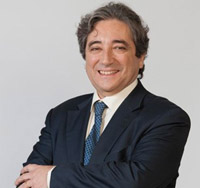 |
Ricardo Serrão Santos, MSc, PhD, D.Biol, is an elected member of the Portuguese Academy of Sciences, and of the Portuguese Navy Academy. He is Principal Researcher on Marine Ecosystems at the University of the Azores - Horta and Invited Professor at the University of Southampton. He is a former Director of the Department of Oceanography and Fisheries, President of IMAR – Institute of Marine Research and Pro-Rector for the Integration of Sea Affairs at the University of the Azores. In 2002 he was awarded a “Gift to the Earth” by WWF and in November 2013 he was knighted “Chevalier de l’ Ordre de Saint Charles” by SAS Prince Albert II of Monaco. He is Chair of EurOcean and Vice-Chair of the European Marine Board. In June 2014 he was elected Member of the European Parliament. He is the author of more than 200 scientific papers and books in the fields of marine biodiversity and ocean ecosystems. He is Associated Editor of “Marine Biodiversity” and Chief Specialty Editor of “Frontiers in Deep-Sea Environments and Ecology”. |
Ed HillNational Oceanography Centre (NOC), UK |
|
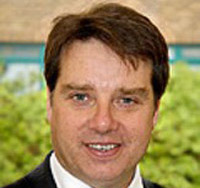 |
Ed Hill took office as Executive Director of the National Oceanography Centre (NOC) in April 2010. In that capacity he is a member of the Executive Board of the Natural Environment Research Council (NERC). He is also a Professor of Oceanography at the University of Southampton. A Physical Oceanographer by training, his research experience is in continental shelf sea processes, especially density driven flows such as frontal jets and dense water cascades. Ed was formerly Director of the National Oceanography Centre, Southampton (2005-2010) and Director of the Proudman Oceanographic Laboratory (1999-2005). Prior to this he was an academic at the University of Wales, Bangor in the School of Ocean Sciences (1986-1999). Ed holds a BSc (1st class) in Applied Mathematics from the University of Sheffield (1981), and an MSc (1983) and PhD (1987) in Physical Oceanography from the University of Wales, Bangor. In 2011, he was awarded an Honorary Doctorate (HonDSc) by the University of Sheffield. He was appointed Officer of the Order of the British Empire (OBE) in 2010 for services to environmental sciences. |
Temel OguzInstitute of Marine Science, Turkey |
|
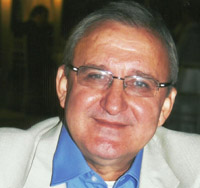 |
Prof. Temel Oguz obtained his B. Sc and M. Sc degrees from the Department of Physics, Middle East Technical University (METU, Turkey), and his Ph. D in the Dynamics of Atmosphere & Oceans from the University of Reading, Department of Meteorology (UK). He then joined the Institute of Marine Sciences (IMS)-METU in 1981 and was promoted to the position of full professor in 1992 at the same institution. He is currently affiliated with the IMS-METU as well as the Coastal Ocean Observing and Forecast System of the Balearic Islands (SOCIB), Palma de Mallorca, Spain. His main interests cover physical oceanography, circulation and ecosystem dynamics, climate change impacts on marine ecosystems, with a focus on the Black Sea, using data analyses and mathematical models. |
Darius CampbellOSPAR Commission |
|
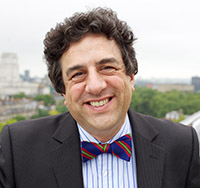 |
Darius Campbell is the Executive Secretary for the OSPAR Commission, which is an intergovernmental organisation aiming to protect and conserve the North East Atlantic and its resources. OSPAR’s Contracting Parties include those members of the European Union with coast opening onto (or a river system emptying into) the North East Atlantic. Before taking up his post in 2012, Darius worked for the UK’s Department for Environment Food and Rural Affairs as a Deputy Director. In this role he was responsible for developing the UK’s National Climate Change Adaptation Programme, and before this, for leading UK policy on marine environment. At this time he also led UK’s policy on action against international illegal fishing (together with UK’s Department for International Development) as well as broader international oceans governance issues. Before joining the UK Civil Service, Darius worked in international development, in particular on agriculture. Work included long term practical development and research programmes in Jordan, Nigeria and India. His first degree was in zoology, followed by an MSC in Livestock production and a PhD in nomadic livestock systems in Nigeria. |
Helena VieiraUniversity of Lisbon, Portugal |
|
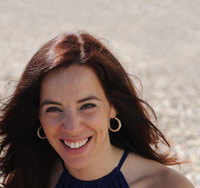 |
Helena Vieira is an entrepreneur by nature, a believer by stubbornness and a constant fighter by need. She is a co-founder and was CEO (2005-2013) of BIOALVO SA, a Portuguese natural resources biotech company and has recently started MY.SPAKOS, a personalized cosmetics enterprise. She also carries out national and international business and scientific consulting on innovation, entrepreunership, technology transfer, marine biotech and sea economy projects. She holds a post graduate in Leadership & Strategy in Pharma & Biotech, from Harvard Business School and a PhD in Biomedicine from Imperial College London. Previously, she was a researcher in molecular and cellular biology, progressing to Associate Professor and Scientific Coordinator of the biomedical and clinical engineering degrees at UCP, Portugal. Currently, Helena is also responsible for the supervision & teaching of Entrepreneurship, Innovation and Technology Transfer courses to MSc and PhD Students in the University of Lisbon. Helena is highly skilled in biotech strategy and major technical aspects of natural products bioactive discovery and development for several industries, while also having specialized skills in innovation and tech transfer business methodologies and management strategies. |
Jeff A. ArdronInstitute for Advanced Sustainability Studies, Germany |
|
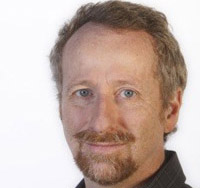 |
Jeff Ardron is a Senior Fellow at the Institute for Advanced Studies in Sustainability (IASS), Potsdam, Germany. His research is concerning global maritime governance and how institutions can evolve and adapt in this era dominated by human impacts and activities, the ‘anthropocene’. Central to this analysis is the varying degrees of institutional transparency and accountability, and how this affects governance effectiveness, social equity, and economic resilience. His current focus is deep sea mining. He maintains his involvement in British Columbia, Canada (where he is from) as President of the Board for the Pacific Marine Analysis and Research Association (PacMARA), an organization he co-founded, that provides technical training and workshops internationally on marine planning. In addition to PacMARA, he is also active within the Global Ocean Biodiversity Initiative (GOBI) and the Deep Ocean Stewardship Initiative (DOSI). His maritime experience started locally, living and working in a small fishing village, later moving to the regional conservation sector, then national-level government and finally working within international conventions. He is a frequent guest lecturer, and has consulted widely, recently for projects in West Africa, Chile, Israel, Canada, and the UK. |
Paul WassmannUniversity of Tromsø, Norway |
|
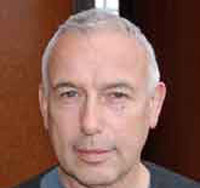 |
Paul Wassmann is professor in environmental biology at the Institute of Arctic and Marine Biology, University of Tromsø – Norways Arctic University. His special interest is in Arctic marine system ecology, C flux in marine ecosystems and physical-biological coupled models of primary production. He has worked in all European seas and extensively in the European sector of the Arctic Ocean. He has published 140 refereed papers, edited 12 dedicated journal volumes and co-authored two outreach books. He is head of the he ARCTOS network in arctic marine ecology and the ARCTOS PhD school and has headed several multidisciplinary research projects, among then the EU FP7 project Arctic Tipping Points and published two books on arctic oceanography, geography and history. |
Jacob CarstensenAarhus University, Denmark |
|
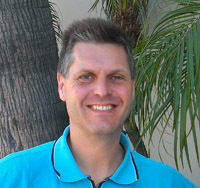 |
Dr. Jacob Carstensen is a professor at the Department of Bioscience, Aarhus University, and the Danish manager for the Baltic Nest Institute (www.balticnest.org). Dr. Carstensen earned his doctoral degree from the Technical University of Denmark in 1994 and has previously been employed at SAS Institute, Technical University of Denmark, National Environmental Research Institute, University of Maryland and Joint Research Centre. Dr. Carstensen is an ecological statistician with over 20 years’ research experience in analysing environmental data. His research focuses mainly on describing and understanding long-term changes of marine ecosystems in response to natural and anthropogenic pressures, particularly eutrophication and climate change. He has developed indicators and assessment systems for ecological and environmental status in support of the implementation of European Directives (WFD, MSFD). He led the work on eutrophication targets for the Baltic Sea Action Plan. Dr. Carstensen is the author of more than 80 papers in peer-reviewed scientific journals. |
Marisa Luisa FernandezCETMAR, Spain |
|
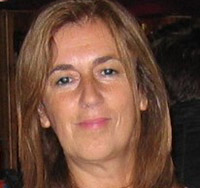 |
Maria Luisa Fernández holds a PhD in Chemistry and is specialized in marine pollution. She was in charge of the coordination of the Network of European National Reference Laboratories for Marine Toxins for more than 9 years at the EU Community Reference Laboratory on Marine Toxins, where she was Chairman of EU Working Groups related to marine toxins hosted by the EU Commission. She is currently the Head of the Department of Control and Management of Marine Environment & Resources in the CETMAR where she is developing and coordinating a number of regional, national and EU projects of different programs related to marine pollution, maritime safety, aquaculture and fisheries. She is the coordinator of the Spanish Technological Platform for Protection of Coast and Marine Environment PROTECMA (Ministry of Science and Technology and coordinator of the EU FP7 STAGES project on Improving the Scientific Knowledge base in support of the Marine Strategy Framework Directive (MSFD). |
Maria BettiEuropean Commission Joint Research Centre |
|
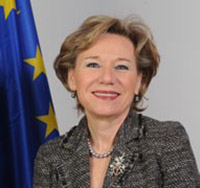 |
Maria Betti obtained her PhD in Chemistry at the University of Pisa (Italy) where she still gives lectures as Professor of Instrumental Analytical Chemistry for Environmental Research. She has published more than 200 scientific articles related to environmental chemistry and protection. She has worked in several laboratories in Europe and the USA. From 1991 to 2008, she led the Analytical and Environment Section of the Institute for Transuranium Elements (ITU) in Karlsruhe (Germany) which is part of the European Commission’s Joint Research Centre. In August 2008, she moved to Monaco where she was appointed Director of the IAEA Marine Environment Laboratories. From January 2010 until September 2012 she was responsible for the entire Environment Programme of the IAEA, heading a new Division called IAEA Environment Laboratories, which consisted of the Marine Environment Laboratories in Monaco and of the Terrestrial Laboratory in Seibersdorf (Austria). Since 1st October 2012 she is Director of the JRC Institute for Environment and Sustainability in Ispra (Italy). |
Alex RogersUniversity of Oxford, UK |
|
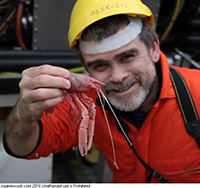 |
Alex Rogers is a Professor of Conservation Biology at the Department of Zoology and a Fellow of Somerville College, University of Oxford. He obtained a degree in Marine Biology and a Ph.D. in the genetics and taxonomy of marine invertebrates at the University of Liverpool. In his early career Alex held Research Fellowships at the Marine Biological Association, Plymouth and at the University of Southampton’s National Oceanography Centre. Since then he has led the Core Programme on Biodiversity at British Antarctic Survey and been a reader in marine ecology at the Institute of Zoology, Zoological Society of London. Alex is currently a Commissioner for the International Commission on Land Use Change and Ecosystems for the Global Legislators Organisation for a Balanced Environment (GLOBE International). He has recently been the Chair of the SCOR Technology Panel on New Technologies for Observing Marine Life and is a UK representative on InterRidge Steering Committee. Alex is the Marine Invertebrate Red List Authority for the IUCN Red List (Species Survival Commission) and is also a member of the Marine Conservation Sub-Committee and Invertebrate Conservation Sub-Committee of the SSC. Alex is also the Scientific Director of the International Programme on State of the Ocean (IPSO). |
Alessandro CriseOGS, Italy |
|
 |
Alessandro Crise, degree in Physics in 1977, is presently Senior Scientist at OGS (Istituto Nazionale di Oceanografia e di Geofisica Sperimentale) and Head of the Crosscutting Actions Team in the Oceanography Department. He served as head of the OGS hydrodynamic and ecological modelling group in the period 1994-2004 and he was appointed as Director of the Department of Oceanography in the period 2004-2012. Presently he is an elected member of the Executive Committee of the European Marine Board, Vice-Chair of EUROGOOS AISBL and EuroARGO Eric Council. He is author of numerous peer-reviewed scientific papers. He has been and is partner of major European projects leading WP/tasks connected with ocean observing systems, operational oceanography and coupled physical-biogeochemical modelling of the Mediterranean Sea. Presently he is PI in three EU projects and leads the Observing Systems Subproject of the Italian Flagship Ritmare Programme. His expertise includes marine biogeochemical modelling and operational oceanography, boundary layer dynamics and science-to-policy interface. Dr. Crise is a member of relevant Italian and international committees on marine sciences such as ESF Marine Board, POGO, EuroGOOS AISBL, GODAE-MEP Task Team and Euromarine+. He acts as referee for scientific journals and several institutions including European Commission, French Research Agency, IFERMER and NERC. |
Nadia PinardiUniversity of Bologna, Italy |
|
 |
Nadia PINARDI holds a Ph.D. in Applied Physics from Harvard University, and she is associate tenure professor of Oceanography at Bologna University, Italy. Her interests range from ocean numerical modelling and forecasting to data assimilation, predictability and numerical modelling of the marine physical-biological interactions. She has written more than 100 papers in peer reviewed journals on a wide range of subjects. The last topic of her research is the understanding of uncertainties in ensemble forecasting and oil spill numerical modelling coupled to operational oceanographic forecasts. Since the mid 90’s, she has coordinated the development and implementation of operational oceanography in the Mediterranean Sea. Since 2004, Nadia directs the Operational Oceanography Group of the Istituto Nazionale di Geofisica e Vulcanologia. She has been a member of the European Environment Agency Scientific Advisory Committee and member of the European Research Council for Earth Sciences. She is now co-president of the Joint Committee for Oceanography and Marine Meteorology (JCOMM), a WMO and Unesco-IOC coordinating group for the development of operational meteo-marine and oceanographic services. Nadia Pinardi was awarded in 2007 the European Geophysical Union (EGU) Fridtjof Nansen Medal for Oceanography and in June 2008 the Roger Revelle Unesco Medal. |
Matthew WhiteUniversity of Exeter, UK |
|
 |
Mat is an environmental psychologist at the University of Exeter Medical School. He did his PhD at the University of Sheffield, focusing on public understanding of environmental risks. His main focus now is on investigating the potential health and well-being benefits of different types of environment. He uses a range of methods including analysis of secondary data, experimental research, field studies, interviews and medical imaging. |
Fabio TrincardiISMAR CNR, Italy |
|
 |
Fabio Trincardi is Director of ISMAR CNR, since October 2008, Director of RITMARE since 2011 and President of CORILA since 2014. His scientific interests include Basin analysis, Sequence Stratigraphy, Quaternary Geology and paleoceanographic evolution of Mediterranean basin and of periantarctic margins. In particular, he concentrates on the evolution of Quaternary continental margins by integrating seismic stratigraphy, sediment core analyses, geochronology, paleo-environmental and paleo–climate reconstructions. Coastal and shelf sedimentation with emphasis on sea-level change and on the mechanisms of strata formation in modern delta systems. Slope stability, submarine landslides and bottom-current deposits on Mediterranean and Antarctic margins. Dense water formation, flow and impact on continental margins and deep sea environments. He has authored more than 120 papers on international journals, has coordinated EU and national projects and has mentored several PhD students in liaison with the University of Bologna. He also served on the boards of Geology, Marine Geology and Geo-Marine Letters. |
Marcel JasparsUniversity of Aberdeen, UK |
|
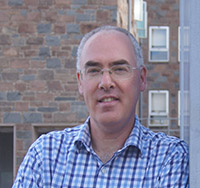 |
The Jaspars group focuses on the functions and applications of marine derived natural products. The goal of the work is to determine the biological role of selected natural products as well as using them as pharmaceuticals and tools for biomedical research. The core skills in the group are natural product isolation and structure determination using spectroscopic methods. Marcel consults for a number of UK marine biotechnology companies and sits on the Industrial Biotechnology Sector group of the Biosciences Knowledge Transfer Network, and has led scientific missions to Japan/US/New Zealand. Marcel was part of the ESF Working Group that prepared the position paper “Marine Biotechnology: A New Vision and Strategy for Europe” (2010). Marcel founded the interdisciplinary Marine Biodiscovery Centre, a £1.6 M investment to focus on marine resources for novel pharmaceuticals, and to investigate fundamental questions in chemical ecology and biosynthesis. The Centre contains facilities for chemistry, chromatography, spectroscopy, molecular genetics and microbiology. Marcel leads the PharmaSea EU FP7 consortium (EUR 9.5 M, 24 partners from 14 countries) which aims to make the use of marine microbial derived compounds a more attractive proposition to the pharmaceutical industry. The microbes are obtained from extreme environments, in particular hadal trenches, cryogenic environments and thermal vents. |
Valerie CumminsImerc |
|
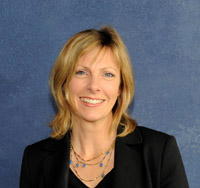 |
Dr. Valerie Cummins is co-founder and Director of IMERC (Irish Maritime and Energy Resource Cluster) which aims to develop a research and commercial cluster of world standing, to achieve Ireland’s potential in the global maritime and energy markets of tomorrow. Her work with the Irish Naval Service, as part of IMERC provides her with a unique insight into civil-military cooperation, a topic that she has presented to navies and governments from around the world. IMERC was awarded by An Taoiseach for excellence in public sector service in 2012. Val was also awarded a prestigious Eisenhower Fellowship in 2012 and the UCC President’s award for leadership for her role in the development of marine science in UCC in 2010. Prior to developing IMERC, Val was the Director of the Coastal and Marine Research Centre for 10 years and was acknowledged by Forfas as being one of the most successful principle investigators in Ireland to win European research funds in 2009. Val is on a number of committees and task forces including the International Scientific Committee for LOICZ (Land Ocean Interactions for the Coastal Zone), the Climate Science Committee of the Royal Irish Academy, the editorial panel of the International Marine Policy Journal, the Marine Renewables Industry Association, the Spike Island Steering Committee, the Cork Harbour Management Focus Group and the Government’s Marine Developers Task Force. |
Jan SeysFlanders Marine Institute, Belgium |
|
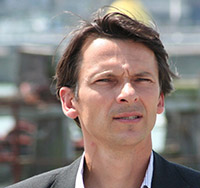 |
Head of the Communications Department of VLIZ (Flanders Marine Institute - Belgium), chair of the European Marine Board Communications Panel since 2010 and member of the news & information group of POGO (Partnership on Observation of the Global Ocean). Trained as a marine biologist – with a PhD in seabird research - and initially active in marine and estuarine research in Belgium/Netherlands (10 years) and as a managing-director (2 years) of a bilateral Kenya-Belgium cooperation in marine sciences. Educational experience as a teacher, tourist guide and developer of learning platforms. As head of communications at VLIZ, he developed a wide-ranging expertise in communicating scientific information to policy-makers, researchers, schools and the public at large. One of the pioneers of the Ocean Literacy movement in Europe and co-organizer of the First Conference on Ocean Literacy in Europe (12 Oct 2012, Bruges). |
Angelo CamerlenghiNational Institute of Oceanography and Experimental Geophysics, Italy |
|
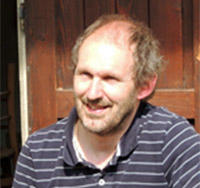 |
Angelo Camerlenghi is the Director of the Geophysics Research section of OGS (National Institute of Oceanography and Experimental Geophysics) and Contract Professor of marine geology at the University of Trieste. His research interests include geology and geophysics of Polar continental margins, submarine geohazards, natural gas hydrates in the marine environment and Mediterranean sub-salt fluids. Angelo is a delegate of the Italian Ministry of Education Universities, and Research (MIUR) and is on the Management Boards of the Mediterranean Science Commission (CIESM) and Joint Programming Initiative for Healthy and Productive Seas and Oceans (JPI Oceans). He is also a member of the Expert Group of the ”5+5” Western Mediterranean Dialogue Expert Group « Higher education and research ». Angelo has published over 100 scientific articles. |
Sam DupontUniversity of Gothenburg, Sweden |
|
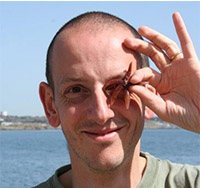 |
Sam Dupont is a marine ecophysiologist at the University of Gothenburg and an Honorary Assistant Professor at the School of Biological Sciences, Hong Kong University. His main research topic is on the impact of increased CO2 and related changes on marine species and ecosystems and was published in more than 90 publications in journals including Nature, PNAS and TREE. His work aims at revealing the mechanisms behind species and ecosystem responses and at developing the needed unifying theory for large scale predictions. He is in direct contacts with various stakeholders, both at local and global level. He is a member of the Advisory Board of the Ocean Acidification International Coordination Centre (OA-ICC), the Executive Council of the Global Ocean Acidification Observing Network (GOA-ON) and the Steering committee of the EuroMarine consortium. He is also in contact with economists through his role in a working group on economics of ocean acidification that brings together scientists from many international scientific initiatives, economists, and representatives of major international organizations including UNESCO, FAO, OECD, World Bank, IGBP, and the CIESM. He is an active partner in several science education projects, including “Inquiry-to-Insight” and “Inquiry-to-SEA“, a collaboration between the University of Gothenburg and Stanford University, the “VirtualLab project” which is a collaboration between the Faculty of Education and Faculty of Sciences at the University of Gothenburg. |
Ferdinando BoeroUniversity of Salento, Italy |
|
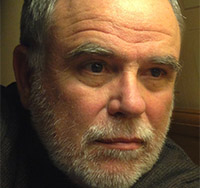 |
Professor of Zoology at the University of Salento, associate to CNR-ISMAR. Main interests: Marine Biodiversity, Ecosystem Functioning, Communication in Science, Citizen Science. ../profiles/unisalento.it |
Quentin CooperBBC, Moderator at EurOCEAN 2014 |
|
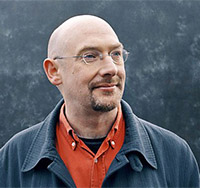 |
Quentin Cooper has written and presented many hundreds of programmes including the Britain’s most listened to science show, the live weekly Material World on BBC Radio 4 – hailed as “quite the best thing on radio” by Bill Bryson and “the most accessible, funny and conversational science programme on radio” by the Radio Times. He’s also Creative Director of Science Oxford, one of the UK’s largest science outreach organisations, and continues to be both the regular host and master-class tutor for the UK and International finals of FameLab, rated as “the world’s leading science communication competition” by BBC World Service. Quentin has presented, produced and been a regular contributor to countless other science, technology, arts and entertainment programmes across BBC radio and television, the Discovery Channel and other channels. Regular and notable organisations he’s worked for include, among others, the Royal Society, the European Commission, the British Council, CERN, the Nobel Foundation, the British Science Association, the European Space Agency, many universities and national governments and several research councils. Quentin’s “major contribution to the public understanding of science & engineering” has been formally recognised in the last couple of years with honorary doctorates from Edinburgh University and Heriot-Watt University, as well as by being made an Honorary Fellow of the Royal Society of Chemistry. His first degree is also from Edinburgh University where he studied Artificial Intelligence and Psychology, and he went on to get a Postgraduate Diploma in Journalism Studies from University College Cardiff. |
Erik BuchEuroGOOS Chair |
|
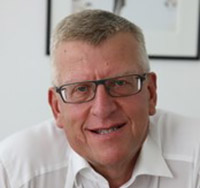 |
Erik Buch’s holds a PhD-degree in physical oceanography and a master degree in management. His scientific career has focused on operational oceanography and marine climate. He has participated in many cruises on research vessels from Denmark, Germany, Iceland, Norway and Sweden and Finland to the North Atlantic and Arctic waters and has acted as cruise leader on many of these. Erik Buch has throughout the years initiated and led many international research projects with focus on operational oceanography and marine climate. In the late 1990’s he introduced operational oceanography in Denmark and initiated and led the foundation of Centre of Ocean and Ice at the Danish Meteorological Institute – a centre that since has grown to be one of the leading organisation within operational oceanography in Europe. He retired from DMI in 2013 and took up as chair of EuroGOOS. |
Christoph WaldmannCenter for Marine Environmental Sciences (MARUM), Germany |
|
 |
Dr. Christoph Waldmann is a senior scientist at the Center for Marine Environmental Sciences (MARUM) at Bremen University. He has been involved in the development and operation of deep-sea instruments and methods since his diploma degree in the Physics Department at Kiel University. During the last few years he contributed to the European ocean observatory as part of the EC funded projects ESONET, HYPOX and EMSO as WP leader and as a member of the steering committees. He is also a Visiting Professor at the Florida Institute of Technology, Melbourne, FL, USA |
Rémi GruetPolicy and Operations Director, European Ocean Energy Association |
|
 |
Rémi Gruet spent 6 years in the private sector in Germany, UK and France before becoming a political advisor at the European Parliament in Brussels. After 4 years working on EU policy he joins the European Wind Energy Association (EWEA) in 2008 as Senior Advisor on Climate & Environment leading to his current position as Policy & Operations Director for the European Ocean Energy Association. His areas of expertise are carbon markets, especially the EU Emission Trading System he followed from proposition to implementation, as well as the UN climate negotiations, renewable energies, and environmental issues. In 2011, he authors the EWEA report on “Wind energy and 2020 EU climate policy”, analysing wind energy’s impact on CO2 reductions. He is a visiting lecturer at the University for Political Science in Lille, France on energy climate and environmental issues. |
Katja PhilippartRoyal Netherlands Institute for Sea Research, the Netherlands |
|
 |
Dr C.J.M. (Katja) Philippart is an estuarine ecologist at the Royal Netherlands Institute for Sea Research, a board member of the Wadden Academy and affiliated with the University of Utrecht. She studies the trophic interactions between the main primary producers (phytoplankton and microphytobenthos) and primary consumers (bivalves) of shallow temperate coastal waters such as the Wadden Sea. In addition, her interest in gathering and communicating scientific knowledge on seas and oceans for the understanding and sustainability of our planet is reflected in the coordination of national and international projects with regard to monitoring and outreach of marine sciences such as the WaLTER project (www.walterproject.nl) and the EU CLAMER project (www.clamer.eu). |
Laura GiulianoMediterranean Science Commission (CIESM) |
|
 |
Officially qualified full professor (Italian Ministry of Research, 2013), Laura is Research Director (DRI) at the Coastal Marine Environment Institute (IAMC) Section of Messina, of the National Research Council (CNR). Having lead various international (mainly EU) scientific projects, she has more recently contributed various strategic panels (OCDE, IUCN) and side-events (EU Parliament) at the interface between science and policy, especially targeting legal and socio-economic issues related to the development of the marine biotechnology sector. She has published more than 40 peer-reviewed scientific articles (including on Science, Nature, PNAS) and has been Guest Editor of various international peer-reviewed scientific journals (FEMS Microbiology and Ecology, Deep-Sea Research Part I, Marine Biotechnology; Marine Genomics). Laura Giuliano acted as Italian Ambassador of the International Society for Microbial Ecology (ISME, 2003-2006). Currently Member of the Scientific Advisory Board of the European Federation of Biotechnology (EFB), and elected Member of the Strategic Advisory Board (StAB) of the JPI Ocean, Dr. Giuliano is detached (since 2004) to the Mediterranean Science Commission (CIESM) Headquarters as Scientific Advisor. |
Michael ThorndykeUniversity of Gothenburg, Sweden |
|
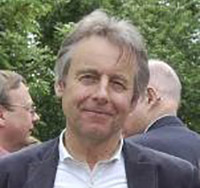 |
Michael Thorndyke is Royal Swedish Academy of Sciences Distinguished Research Chair in Experimental Marine Biology and Head of International Development at The Sven Lovén Centre for Marine Sciences, University of Göteborg, Sweden. His current interests focus on the impacts of Climate Change on the Marine Environment together with several International Programmes to develop Global Consortia of Marine Infrastructures and Institutes. In this respect he has been involved in many large scale European Infrastructure projects for example as coordinator of ASSEMBLE (http://www.assemblemarine.org); EuroMarine (http://www.euromarineconsortium.eu) and Scientific Coordinator for the ESFRI Roadmap project EMBRC (http://www.embrc.eu). He is currently Chair of WAMS, The World Association of Marine Stations (http://www.marsnetwork.org/world-association-marine-stations-wams). In 2011 he was awarded the Royal Swedish Academy of Science Linnaeus Gold medal for his contributions to the International Development of Marine Research Stations. |
Frédéric BriandDirector General, Mediterranean Science Commission (CIESM) |
|
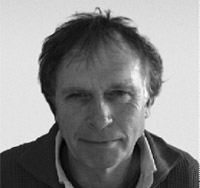 |
Frédéric Briand studied marine ecology (Ph.D.) at the University of California. He spent the first part of his career in marine reesarch, investigating the dynamics of marine systems in the north Pacific, the north Atlantic and the Caribbean Sea and is the discoverer of invariants in the architecture of global food webs - now a full research sector on its own. Thereafter he led multi-disciplinary programs in international Agencies (UNESCO, IUCN), before taking on the direction of CIESM - the Mediterranean Science Commission which federates 5000 researchers based around the Mediterranean / Black Sea region. He is the founder and editor of the noted CIESM Monograph Series on Mediterranean Marine Sciences (now reaching 45 volumes). Frédéric Briand is the promoter of international 'marine peace parks' based on co-governance of the 'marine commons', and a leading advocate of lending United Nations control over all migratory cetaceans on the High Seas. Whaling Commissioner at the IWC, adviser to diverse scientific Boards, he also represents the Mediterranean region on the UN Committee on the health of the oceans (GESAMP). |
Luis Valdés SanturioIntergovernmental Oceanographic Commission of UNESCO |
|
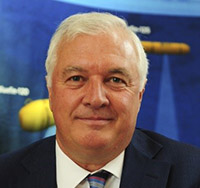 |
Dr. Luis VALDÉS SANTURIO (Spain) is, since January 2009, the Head of Ocean Sciences at the Intergovernmental Oceanographic Commission of UNESCO, and formerly (2000-2008) he has been the Director of the Centro Oceanográfico de Gijón - Instituto Español de Oceanografía (CO Gijón-IEO). With more than 30 years of experience in marine research and field studies related with marine ecology and climate change, he established in 1990 the time series programme based on ocean sampling sites and marine observatories which is maintained by Spain in the North Atlantic (www.seriestemporales-ieo.com). He has advised various governmental, intergovernmental and international organizations as well as research funding agencies. He has a vast experience in ICES where he has chaired different Working Groups and Committees including the Oceanographic Committee. He also served as Spanish Delegate in ICES and in the IOC-UNESCO. |
Sybille van den HoveMEDIAN, Spain |
|
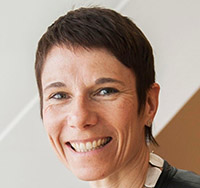 |
Sybille is Director of MEDIAN, a small research, teaching and consulting company in Barcelona. She has a background in Physics and in Ecological Economics. Her professional interests are sustainability governance; science-policy interfaces; decision-making and policy formation under conditions of complexity; integration of natural and social sciences research; environmental research strategies; and environmental strategies of corporations. Currently she works in the areas of biodiversity governance at EU and international levels; precaution and innovation; nuclear governance in a post-Fukushima world; and business sustainability strategies. In the marine biodiversity field, since 2005 she has contributed to the socio-economic research component of three major EU research projects on deep-sea ecosystems: HERMES, HERMIONE and MIDAS. She is currently chairing the Scientific Committee of the European Environment Agency. |
Damien PérisséConference of Peripheral and Maritime Regions of Europe (CPMR) |
|
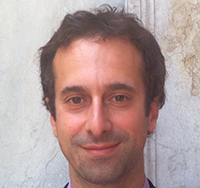 |
Damien Périssé is the Director in charge of maritime affairs of the Conference of Peripheral and Maritime Regions of Europe (CPMR), which brings together more than 150 Regions. CPMR aims at contributing to the improvement of synergies between regional development strategies and European maritime policies. Research and innovation are at heart of its work. CPMR is currently focusing its work on how ESI funds can be best used in support to regional development strategies in synergy with other European funding sources (e.g. Horizon 2020). |
Tim DeprezUniversity of Ghent, Belgium |
|
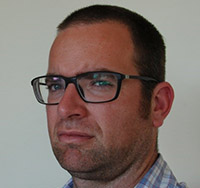 |
Tim Deprez has a PhD in Biology from Ghent University. Since 2008 he has at Ghent University been coordinating the Erasmus Mundus Programme in Marine Biodiversity and Conservation (EMBC) followed up in 2012 by the Internatonal Master of Science in Marine Biodiversity and Conservation (EMBC+). These programmes, involving 7 major universities and over 30 marine research institutes and networks have since trained over 300 international students. Since 2011 Tim is the coordinator of the MARES doctoral programme in Marine Ecosystem Health and Conservation. This programme is currently training over 30 international PhD students within a consortium of 22 partners. He has also been active in many international teaching and training initiatives (Organizer of Summer Schools at different European Marine stations, Erasmus Teacher exchange experiences, …). In the past year he coordinated the setup of a new Marine training office under the framework of EMBRC. Aim of this training office is to support marine training ranging from regular MSc programmes to a variaty of lifelong learning and staff training initiatives. Tim is co-chairing a recently established Marine Board working group on visions on Marine Graduate training and education. |
Vangelis PapathanassiouHellenic Centre for Marine Research, Greece |
|
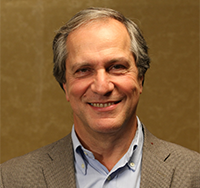 |
Vangelis Papathanassiou obtained his first degree in Biology from the University of Athens followed by a Ph.D. degree on Marine Biology from University of Swansea (UK). He is currently Research Director of the Institute of Oceanography in the Hellenic Centre for Marine Research (HCMR), in Greece, being also the Director (2003-2006) and Acting Director (2009-2012) of the Institute in HCMR. He has worked for more than 30 years in the fields of ecotoxicology, marine biology and ecology and has long experience in international marine policy and management. His current work focuses on marine research as well as on policy-relevant marine research in the Mediterranean and the Black Sea. Recently, he was involved in expeditions and research work in the Red Sea. He was the Greek representative member of Environment Committees of DG research for the 5th FP and 6th FP. He is currently the Greek representative of the “Climate Action, Resource Efficiency and Raw materials” Committee of the Horizon2020. He was the Coordinator of the SSA European program IASON, and SESAME-IP (2006-2011). He is currently leading the European project PERSEUS (2012-2015), with 53 partners from 21 countries, aiming at helping the implementation of Marine Strategy Framework Directive (MSFD) in the Mediterranean and the Black Seas |
Kathrine Angell-HansenJPI Oceans |
|
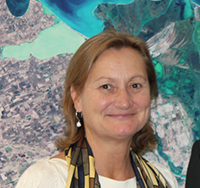 |
Kathrine Angell-Hansen is the Director of the secretariat to the Joint Programming Initiative on Healthy and Productive Seas and Oceans (JPI Oceans) presently supported by 20 European member countries. She took up the position in 2010 after being seconded for 4 years to the European Commission on marine and maritime science and technology in the development of the Integrated European Maritime Policy (IMP). Prior to this, she worked close to 10 years in public sectors in Norway, lastly as a Deputy Director General in the Ministry of Fisheries and Coastal Affairs, Department of Budget, as well as research and innovation policy. During this period she was also a Norwegian delegate to the Food quality Safety program under the European Framework Program 6. Before that, she was employed by the Research Council of Norway with responsibility for the biotech, food and maritime industry and innovation programs, industrial strategy development and international cooperation. Kathrine likewise has 10 years' experience from two of the largest Norwegian companies amongst others in the aquaculture and seafood with the responsibility for trade policy, marketing and product development towards the European market. This also led her to work for some years in France and Denmark and participate in different strategy groups on merger processes. She has been a board member in the Norwegian Institute of International Affairs. Kathrine was also part of the steering group for Foresight aquaculture conducted by The Norwegian Research Council; as well as the restructuring group on "green" and "blue" research institute sectors alliance in Norway leading into NOFIMA. Her background is from the University of Oslo, where she holds an extended master's degree in strategic planning from the faculty of natural sciences. |
Marianne WenningDirector for 'Quality of Life, Water & Air' in DG Environment |
|
 |
Marianne Wenning is currently Director for 'Quality of Life, Water & Air' in DG Environment of the European Commission. In this capacity she is overseeing the implementation and enforcement of an extensive body of environmental legislation with regard to air quality, industrial emissions, water & marine issues and industrial accidents and works towards the further integration of environmental and sustainability aspects into other Community policies. Ms.Wenning has been working for the European Commission since 1992. She was a Head of Unit in Europe Aid (Asia) and in DG Environment (industrial emissions & air quality) before she become Director for 'Legal Affairs & Cohesion' in DG Environment from 2011 to 2013. Her experience in developing and implementing environmental policies, cutting across also areas such as transport, agriculture, regional, industrial, research and development policies includes the economic aspects of environmental policy, programme-management in Asia as well as negotiations at European and international/UNECE level in particular with regard to the Kyoto, the Montreal and the Gothenburg Protocols. |
Stefano PirainoUniversity of Salento, Italy |
|
 |
Stefano Piraino (Ph.D. Mar. Environ. Sciences) is Professor of Zoology & Evolutionary Biology at the University of Salento, Lecce. He acts as Scientific Coordinator or WP leader of several national and international (EU-funded) research projects on the biology, ecology, taxonomy and systematics of cnidarians and more generally on the evolution of basal metazoans. Current interests deal with jellyfish outbreaks (http://www.jellyrisk.eu) and marine bioinvasions (http://www.marine-vectors.eu), cnidarian taxonomy and systematics, and the molecular mechanisms of cell transdifferentation in medusae by Next Generation Sequencing approaches. Co-Founder and Past-President of the International Hydrozoan Society, member of the Board of the Italian Union of Zoologists, he published more than 80 articles in journals such as TREE, Developmental Biology, Journal of Comparative Neurology, MEPS, Marine Biology, PLoS ONE. He acted as Guest Editor of three symposium volumes in journals Biological Invasions, Marine Ecology, Scientia Marina. He has been recently appointed as member of the Steering Committee of the new EuroMarine Consortium (www.euromarineconsortium.eu). |
Ana Teresa CaetanoEuropean Commission, DG Research and Innovation |
|
 |
Ana Teresa Caetano - European Commission DG Research and Innovation (Brussels) - Holds a Master of Sciences in Biotechnology and a PhD in Chemical Engineering obtained at the Technical University of Lisbon – School of Engineering. She was research assistant at the National Laboratory of Engineering and Industrial Technology in the Department of Renewable Energies and a fellow at the Joint Research Centre's Environment Institute. Ana Teresa Caetano joined the European Commission in 2001 as Scientific Officer in Directorate-General Enterprise. Later she moved to the European Maritime Safety Agency as head of the Research & Innovation sector. She is currently Policy officer in Directorate-General Research and Innovation dealing with the implementation of EU programmes in the field of marine research and innovation. |
Fernando JAS BarrigaUniversity of Lisbon, Portugal |
|
 |
Fernando Barriga is a full professor of the Faculty of Science of the University of Lisbon and, since 2002, a member of the Academy of Sciences of Lisbon. Very early in his career he elected applied science, in the domain of mineral raw materials, as his main scientific interest. He studied in Canada for his PhD, with WS Fyfe, at a time when the first seafloor hydrothermal fields were discovered. He became deeply involved in the understanding of ancient mineral deposits under the light of active deposits on the present-day seafloor. His PhD thesis was one of the first to follow this line of reasoning. He is a respected authority in the genesis of, and the search for, massive sulphide deposits on land and on the seafloor. He was involved in the discovery of several sms deposits in three oceans (Atlantic, Pacific, Arctic). Fernando has participated in many cruises at sea (total in excess of 8 months), including serving as co-chief scientist in Leg 193 of the Ocean Drilling Program, to investigate Pacmanus, a hydrothermal field in the waters of Papua New Guinea, very close to Nautilus Minerals Solwara 1. |
Ronán LongNational University of Ireland, Galway |
|
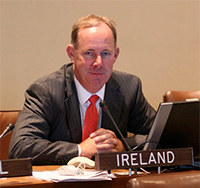 |
Ronán Long holds a personal professorship and the Jean Monnet Chair of European Law at the School of Law, National University of Ireland Galway. He is the author/co-editor of several books on oceans law and policy issues including: Enforcing the Common Fisheries Policy (2000), Marine Resource Law (2007) and (with M. Nordquist, J. Norton Moore, R. Wolfrum and T. Heidar), Law, Science and Ocean Management (2007), Legal Challenges In Maritime Security (2008), The Regulation Of Continental Shelf Development: Rethinking International Standards (2012), Navigation Rights and Globalization (2015). He worked previously for the European Commission (1994–2002), and for the Naval Service in Ireland (1981-1994). He was the first recipient of the Michael Manahan Fellowship and held a Scholarship-in-Residence at the University of Virginia School of Law in 2007. Professor Long has participated in a broad range of EU marine research projects since the early 1990s and his current research focus is on the implementation of the ecosystem approach in the marine environment, the interface between the law of the sea and human rights, as well as energy law. He is a keen sailor and has represented Ireland at the top competitive level in ocean racing. |
Alessandro LovatelliFood and Agriculture Organization of the United Nations Fisheries and Aquaculture Department |
|
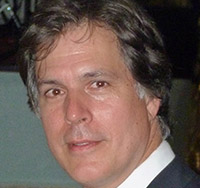 |
A marine biologist and aquaculturist, he obtained his B.Sc. and M.Sc. degrees from the universities of Southampton and Plymouth (United Kingdom), respectively. He started his professional carrier in the European private sector working on the artificial production and on-growing of commercially valuable bivalve species and on commercial depuration. He joined the Food and Agriculture Organization in 1987 working on a regional aquaculture project implemented by the Network of Aquaculture Centres in Asia-Pacific. His subsequent FAO assignment was in Mexico working on a regional aquaculture development project engaging almost all the Latin American countries and the Caribbean. From 1993 to 1997 he worked in Viet Nam, Somalia and then again in Southeast Asia. In Viet Nam he headed the aquaculture and fisheries component of a large European Union project developing, among many other activities, 10 regional aquaculture demonstration, training and extension centres. In Somalia he consulted for the European Commission analysing in depth the status of the fishery and aquaculture industries and proposing follow-up long-term actions to be supported thought the international development and donor community. Following an additional year in Viet Nam as one of the team leaders under the Danish-funded Fisheries Master Plan Project, he was once again recruited by FAO as the Aquaculture Advisor attached to the EASTFISH project in Denmark (Eurofish - www.eurofish.dk). In 2001 he moved to the Fisheries and Aquaculture Department of FAO in Rome, Italy. The main activities currently focused on are marine/offshore aquaculture development, transfer of farming technologies and resources management. Mr Lovatelli geographical coverage is global, but acts as the departmental focal point for the North Africa and Near East region. He has considerable experience with a number of regional fisheries management bodies and currently is the Technical Secretary of the Regional Commission for Fisheries (RECOFI) Working Group on Aquaculture (WGA). Mr Lovatelli has published extensively in different areas of aquaculture and has coordinated and co-authored a number FAO technical reviews and papers focusing on marine aquaculture development. |